

Seasonal Closet Rotation Toronto: A Step-by-Step Guide
/Every Toronto closet has the same quiet problem. It is built to hold a full year of clothing, but only one season of it is needed at a time. In November, the sandals, linen shirts and swimsuits take up the same space as the parkas, wool sweaters and boots you need today. In May, the situation reverses. The result is a closet that feels crowded all year, even when you own a reasonable amount.
Seasonal closet rotation in Toronto is the simple fix. Twice a year, you swap what is in season to the front and move what is not to storage. Done well, it takes an afternoon, frees real space, and makes getting dressed noticeably easier. Done badly, it just moves clutter from one place to another.
This step-by-step guide to seasonal closet rotation Toronto households can actually keep up shows you how to do it well. It covers when to swap in a climate like ours, a five-step method you can follow in any closet, how to handle small condo spaces and larger family homes, how to store coats, knits and boots, how to keep moths and damp away, and when it makes sense to bring in a professional. If you want the wider picture of keeping your whole home on track through the year, our Seasonal Organization Toronto checklist pairs well with this guide.
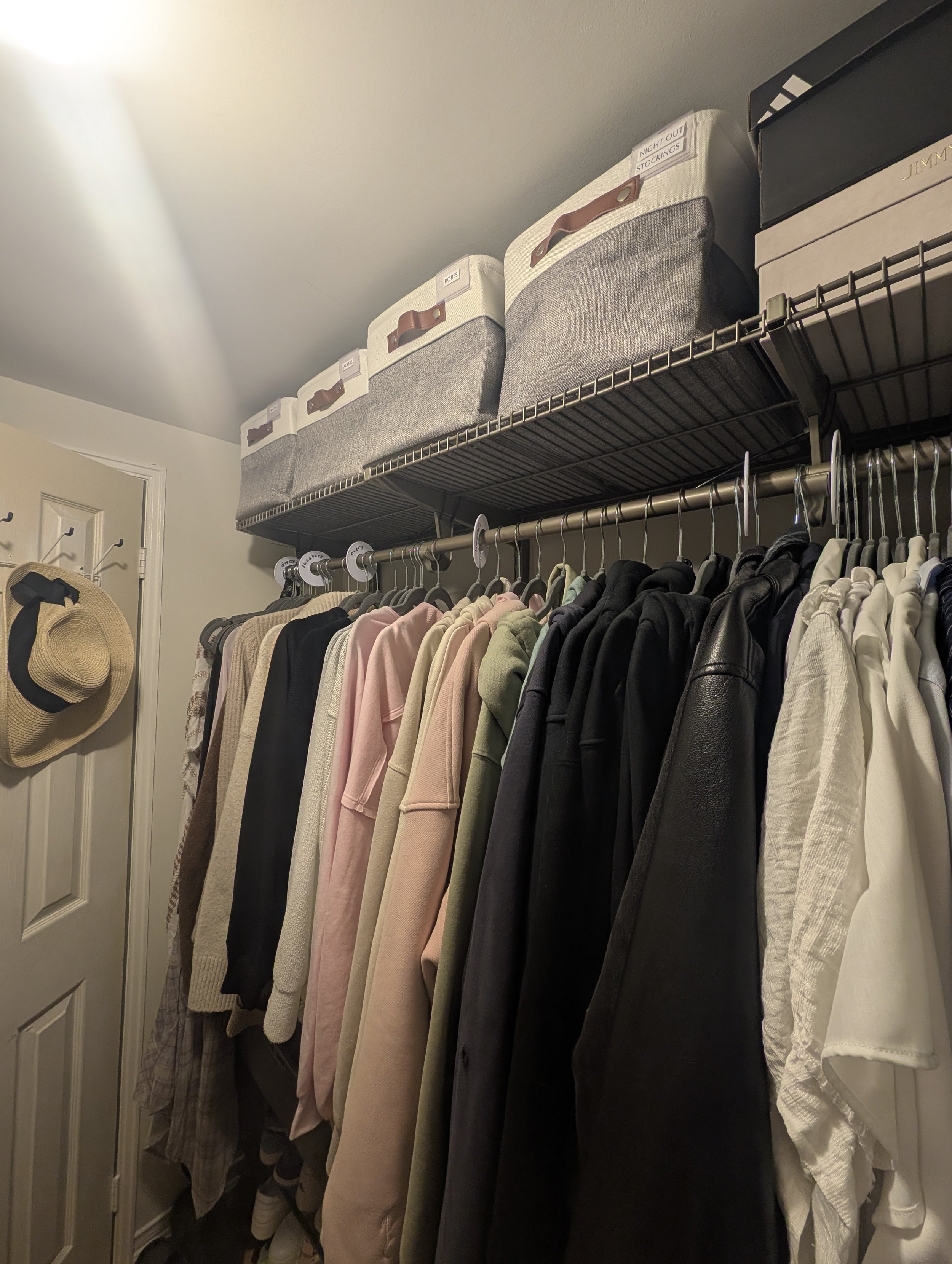
1. What Seasonal Closet Rotation Actually Is
Closet rotation, sometimes called a seasonal wardrobe swap, is the practice of keeping only the clothing you need for the current season in your everyday closet and storing the rest. In winter, that means coats, sweaters, thermal layers and boots are within easy reach. In summer, those pieces go into storage and lighter clothing comes out.
It sounds simple, and in principle it is. But the value is not only in moving clothes. A rotation is the one moment, twice a year, when you handle every piece you own. That makes it the best opportunity to notice what no longer fits, what you never wear, what needs repair and what you have forgotten you have. A well-run closet rotation is part swap, part edit, and part reset.
For Toronto homeowners, seasonal closet rotation is less about fashion and more about function: the right clothes, in the right place, at the right time. A rotation is different from a full closet overhaul. An overhaul reorganizes your closet system: shelves, rods, bins and layout. A rotation works within the system you have. You can read about the larger system side in our guide to Closet Organization Toronto. This guide focuses on the swap itself.
2. Why Toronto Closets Need It More Than Most
Toronto's climate asks a lot of a wardrobe. Summers are warm and humid. Winters bring deep cold, snow and salt. Spring and fall are short and unpredictable, which means you often need light layers and heavier outerwear in the same week. Few cities need such a wide range of clothing.
Space makes it harder. Many Toronto homes were built with modest closets. Condos near High Park and across the city often have a single reach-in closet per bedroom. Semi-detached and townhome families in Leaside, East York and Scarborough work with narrow hallway closets. Even in larger homes in Pickering, Ajax, Whitby and Oshawa, closets rarely keep up with the number of clothes a family accumulates.
When you keep four seasons of clothing in a space designed for one or two, three things happen. Clothes get crushed, which causes wrinkles and wear. Items get lost at the back, which means you wear the same favourites repeatedly. And getting dressed takes longer, because you are searching through things you cannot wear right now. Rotation solves all three.
3. When to Rotate: A Toronto Timeline
There is no single correct date, because the weather changes every year. These windows work well for most Toronto households.
Fall swap (late September to early November): Bring out coats, sweaters, scarves, boots and thermal layers. Store sandals, shorts, light dresses and swimwear. Aim to finish before the first hard frost so you are never caught without a warm coat.
Spring swap (late March to May): Store heavy coats, bulky knits and snow gear. Bring out light jackets, rain gear, short sleeves and sandals. Toronto springs can include a late cold snap, so keep one warm layer and a light coat accessible until mid-May.
A mid-season check (optional): Some households add a short check in January and July. These are light reviews, not full swaps. They are a good time to pull anything that does not fit, add repairs to a list, and put away items from a holiday or vacation.
A practical tip is to tie your rotation to dates you will remember. Many people choose the weekend after Thanksgiving for fall and the first long weekend in May for spring. A date you can anchor to is a date you will keep.
If you are reading this in November, you are close to the ideal fall window. The first cold mornings have arrived and the festive season is just around the corner, so a rotation now means your closet is ready for hosting, travel and everything winter brings.
Less Clutter. More Living.
Winter is coming and the festive season is close. If a closet rotation feels like too much on top of everything else, a Toronto home organizer can do it with you, one space at a time.
4. Before You Start: Declutter First
The most common mistake in closet rotation is storing everything. If you pack away every item you own, you are paying to keep things you do not wear and you will repeat the same crowded closet next season.
Declutter first. Before you swap, take a quick pass through the clothing you are about to store and the clothing you are about to bring out. Ask these questions about each piece.
Did I wear this last season?
Does it fit me now, as I am today?
Is it in good condition?
Would I buy it again today?
Does it work with at least two or three other things I own?
If the answer to most of these is no, the item is a candidate for donation, resale, repair or recycling. You do not need to be ruthless. Items with real sentimental value can stay. But if you are storing clothing out of guilt or "someday," the rotation is the right time to let it go.
If you feel stuck at this stage, or your closet is very full, a decluttering session is a useful step before the rotation. Our Decluttering Services Toronto page explains how a professional can help with that part.
5. The Five-Step Rotation Method
Here is the method we recommend. It works in a condo closet, a walk-in or a shared family closet.
Step 1: Choose Your Time and Clear a Workspace
Set aside two to four hours. Clear the bed or a large table so you can sort and fold. Gather what you will need: bins or bags, garment bags, labels, a donation bag, a repair bag and a laundry basket.
Step 2: Empty the Zone You Are Swapping
Take out everything that belongs to the season you are storing. Then take out the items from the season you are bringing in. Seeing both groups together shows you exactly what you own and how much space each needs.
Step 3: Edit
Sort each item into four piles: keep and wear, keep and store, repair, and donate or sell. Be honest about fit and condition. This is the step that makes rotation work.
Step 4: Clean Before Storing
Launder or dry-clean everything going into storage. Skin oils, perspiration and food residue that are not visible can attract pests and cause staining over time. Make sure items are completely dry before packing them.
Step 5: Store and Restock
Pack the off-season items by category in labelled containers. Put the in-season items back in the closet with the most-used pieces at eye level. Place the bins in your storage spot and record where they are.
Once you have done this twice, it becomes a routine rather than a project.
6. How to Decide What Stays In and What Goes Out
Some clothing is clearly seasonal: parkas, shorts, snow pants, swimsuits. But much of a wardrobe sits in a grey area. These guidelines help.
Keep in the closet year-round: Items you wear in more than one season, such as jeans, lightweight sweaters, cotton shirts, blazers, and most trousers and work clothes. Layering pieces, like tank tops and thin cardigans, also stay.
Move to storage: Heavy coats, bulky knits, wool socks, thermal layers, snow gear, sandals, swimwear, linen and light summer dresses, and anything you only wear in extreme weather.
Keep a "shoulder season" zone: Toronto's spring and fall are unpredictable. Keep a small section for transition pieces: a light jacket, a medium sweater, rain boots and scarves. This lets you adjust without reopening storage.
Keep a "just in case" winter layer in spring and a light layer in fall: A cold week in May or a warm week in October is not unusual here. One warm jacket and one light jacket on hand prevent repeat trips to storage.
7. Rotation in a Small Condo Closet
Condo closets are the hardest to rotate because there is nowhere obvious to put the off-season clothing. The solution is to use space creatively and stay selective.
Use under-bed storage. Flat, lidded bins under the bed hold off-season sweaters, jeans and folded items. Choose bins with wheels or handles so they are easy to pull out.
Use the top shelf. Place labelled bins or garment boxes above the hanging rod for items you need twice a year.
Add vertical space. Hanging organizers, over-the-door racks and shelf dividers make use of height.
Use vacuum storage carefully. Vacuum bags can shrink bulky items such as duvets and heavy sweaters, but avoid using them for wool coats, down jackets, leather or delicate fabrics, because compression can damage fibres and reduce loft.
Consider a locker. If your building offers storage lockers, they can hold sealed bins of off-season clothing. Make sure the locker is dry and well ventilated.
Edit harder. In a small closet, fewer items are the real secret. A tight, well-chosen wardrobe rotates far more easily than a large one.
If your condo storage is truly limited, a professional can help you plan what fits and what does not. For a deeper dive into condo and walk-in closet systems, see our Closet Organization Toronto guide.
8. Rotation in a Walk-In or Family Closet
Larger closets bring a different challenge: there is room to keep everything, so nothing ever leaves. The closet can become a year-round holding area, and finding what you need gets harder as the closet fills.
For Walk-Ins
Divide the space into seasonal zones. Keep current-season items in the most accessible area and off-season clothing at the back, on higher shelves or on a separate rod.
Even if there is room, keep the swap. Closets with fewer items are easier to maintain.
Use consistent hangers and labels so the closet stays visually calm.
For Shared Family Closets and Hallway Closets
Give each family member a defined zone.
Keep children's clothing within their reach and parents' clothing higher up, where it makes sense.
Use a single bin per person for off-season items, labelled clearly.
In family homes in Ajax, Whitby, Pickering and Oshawa, basements and garages often serve as storage for off-season clothing. If you use these areas, keep clothing off the floor, away from exterior walls, and out of direct heat or damp (see section 13).
9. How to Store Winter Clothing
When spring arrives, winter clothing needs careful storage because it is bulky, valuable and prone to damage.
Wool and knitwear: Clean before storing. Fold rather than hang, because hanging can stretch shoulders. Store in breathable containers or cotton bags. Add cedar blocks or lavender sachets to deter moths. Avoid plastic bags that trap moisture.
Down and puffer jackets: Clean according to the label and make sure they are completely dry. Store loosely in a breathable bag, not tightly compressed, so the fill keeps its loft.
Wool and dress coats: Use sturdy hangers with broad shoulders. Cover with breathable garment bags (not thin plastic dry-cleaning covers). Leave space between coats so air can circulate.
Snow pants, mitts and toques: Wash, dry fully, and store together in one labelled bin so you can find the complete set when winter returns.
Thermal layers and wool socks: Fold into a bin together. These are items you will need on the first cold morning, so label the bin clearly.
10. How to Store Summer Clothing
When fall arrives, summer clothing goes into storage. It is lighter than winter clothing, so it takes up less space, but it still needs care.
Wash swimwear thoroughly to remove chlorine and salt, and let it dry fully.
Clean sunscreen and sweat from shirts and dresses before storing. These can leave stains that appear months later.
Fold light cotton and linen items in breathable bins.
Store sandals and summer shoes in clear boxes or shoe racks, with a note of what is inside.
Keep hats in a hat box or a bin with something supporting their shape.
Items you may wear year-round in air-conditioned offices or on travel, such as light cardigans and shirts, can stay in the closet.
11. Coats, Boots and Accessories
Coats and footwear deserve their own plan because they are bulky and affect the entryway as much as the closet.
Coats: Keep only the current season's coats accessible. In winter, that is typically one or two coats per person, plus a lighter jacket for milder days. Extra coats can move to a spare closet or a storage bin.
Boots: Clean, dry and condition boots before storing them. Stuff the shafts with paper or boot shapers to keep their form. Store in a cool, dry place.
Hats, scarves, gloves and mitts: Keep these in a basket or bin by the door during winter. In spring, wash and store them together.
Bags and accessories: Rotate heavy winter bags and leather items out of daily use. Stuff handbags with tissue to keep their shape, and store in dust bags.
Belts and jewellery: These can often stay in place, but check them during a rotation for repairs or items no longer worn.
Organization That Lasts Beyond the Season.
We help Toronto and Durham Region families set up closet systems that stay organized from one season to the next.
12. Choosing Storage: Bins, Bags and Boxes
The right containers make rotation faster. The wrong ones create problems. Here is a simple guide.
Breathable fabric bins and garment bags: Best for wool, knits and delicate fabrics. They let air circulate and reduce moisture.
Clear plastic bins with lids: Good for sturdy items such as jeans, athletic wear and accessories, and for clear labelling. Avoid sealing damp items inside, because moisture can lead to mould.
Cardboard boxes: Acceptable for short periods, but avoid them in damp basements or garages, where they absorb moisture and attract pests.
Vacuum bags: Useful for bulky bedding and some synthetic items, but not for wool, down, leather or delicate fibres.
Garment bags: Excellent for dress coats, suits and formal wear.
Whichever you choose, label each container on two sides: the owner, the season and the category (for example, "Winter knits: Sam"). Keep a list on your phone so you can find a specific item without opening every bin.
Before buying anything, finish your edit. Buying storage first usually means buying the wrong size. Sort, count and then measure. This is the same principle we use in all of our closet organization projects.
13. Protecting Clothing from Moths, Damp and Odours
Storage problems rarely show up until you open the bin months later. A few precautions prevent most of them.
Moths: Moths are attracted to natural fibres, especially soiled wool and cashmere. Clean everything before storing. Use cedar blocks, lavender or moth-repellent products designed for closets, and replace them each season. Inspect stored knits when you rotate and look for small holes or fine webbing.
Damp and mould: Basements, garages and exterior walls can be humid, especially in spring and summer. Keep bins off the floor on shelves or pallets. Consider a dehumidifier in damp areas. Never store clothing that is not fully dry.
Odours: Musty smells usually mean moisture. Air out stored items before wearing them. Baking soda sachets and activated charcoal bags can absorb odours in enclosed storage.
Heat and sunlight: Avoid attics and sunny spots. Heat can damage elastic, fade colours and break down glue in shoes.
Pests: Avoid storing food near clothing. Check storage areas for signs of pests and seal any gaps.
14. A Kids' Clothing Rotation
Children grow quickly, so a kids' rotation is slightly different. It combines the seasonal swap with a size check.
Pull out the clothes your child currently wears and check which still fit. Many families find several items are already too small.
Sort outgrown clothing into pass-on (for a sibling or friend), donate and keep-for-memory piles. Limit keepsakes to a small box.
Store hand-me-downs by size and season. A bin labelled "Girls 5T winter" or "Boys 8 spring" makes it easy to find things later.
Bring out the next season's clothing and check the sizes before you need them. This is especially helpful before the first cold snap, when snow pants, boots and mitts must fit.
Make a short list of items to buy.
For the festive season, a kids' rotation done in November also makes space before gifts, including clothing, arrive. If you want more on preparing children's spaces for the holidays, see our Seasonal Organization Toronto checklist.
15. When to Hire a Professional Organizer
Many people complete a closet rotation themselves. But there are times when professional help makes sense.
The closet is overfull and you do not know where to begin.
You feel overwhelmed by decisions about what to keep.
You have little time, especially in a busy season.
You are preparing for a move, a downsizing or a family change.
You want a system tailored to your space, not a generic template.
You have tried to keep a rotation going and it has not lasted.
A professional home organizer brings an objective eye, a tested process and steady momentum. At Simplify With Sheeba, we work with families across Toronto and Durham Region on everything from a single closet to whole-home projects. You can read more about our approach in our Professional Organizer Toronto guide, explore our Home Organization Services Toronto page, or learn about our Closet and Wardrobe Organization service.
16. Your Seasonal Closet Rotation Calendar
MonthFocusKey TasksJanuaryLight reviewRemove items that do not fit, add repairs to a list, put away holiday outfitsFebruaryPrepCheck winter clothing condition, plan spring editMarchPlanDecide on your spring swap date, buy any storage you needAprilSpring swapStore heavy coats and knits, bring out light layers, keep one warm layer on handMaySettleFinish the swap, donate, restock basicsJuneSummer checkPack away anything not worn, check travel clothingJulyLight reviewReview summer fit, repair and donateAugustPrepPlan fall swap, check kids' sizes for school and winterSeptemberFall swap beginsStart rotating, bring out light jackets and sweatersOctoberFall swapStore summer clothing, bring out coats and bootsNovemberWinter readyCheck winter gear, prepare for hosting and holiday outfitsDecemberMaintainKeep the closet tidy, one in, one out for gifts
17. DIY Rotation vs Professional Rotation
FactorDIY RotationProfessional RotationTimeA full afternoon or a weekendUsually completed in one focused sessionDecision-makingEasy to stall on difficult itemsA guided, objective editStorage choicesOften bought before sortingMeasured and matched after the editConsistencyDepends on motivation each seasonA system you can repeatSpace planningBased on what you can seePlanned around your closet and storage spotsBest forSmaller wardrobes and confident organizersOverfull closets, busy schedules and life transitions
Neither approach is better for everyone. If your closet is manageable and you enjoy the process, DIY works well. If you want help getting a lasting system in place, support can make the first rotation easier, and later ones simpler.
18. Common Closet Rotation Mistakes
Storing everything. Rotation should include an edit. Do not store what you do not wear.
Skipping cleaning. Dirty clothes attract pests and stain.
Using plastic bags. They trap moisture and can cause mould and odours.
Buying bins first. Edit first, then choose containers.
Storing in damp places. Basements and garages need extra care.
Over-compressing. Vacuum bags can damage wool, down and delicate fabrics.
Forgetting to label. Unlabelled bins get ignored or reopened repeatedly.
Swapping too early. Toronto weather can surprise you. Keep a few transition layers accessible.
Doing it only once a year. Two swaps and a quick mid-season check keep the closet working.
A Note on Buying Less
One benefit of a regular rotation that is easy to miss is how it changes your shopping. When you handle every item twice a year, you quickly see duplicates: the fourth black sweater, the third pair of similar boots. You also see gaps, such as a missing rain jacket or mitts that no longer fit. Shopping from a clear picture of what you own means fewer impulse purchases and more pieces you actually wear.
Keep a short running list on your phone during each rotation: items to replace, items to repair and items you are missing. Review it before any seasonal sale. For Toronto households facing a long winter, this list is especially useful in October, when boots, coats and outerwear are in demand and early shopping often means better selection.
A Note on Sentimental Clothing
Not every piece of clothing is a wardrobe decision. A wedding outfit, a child's first snowsuit or a favourite jacket from years ago may carry memories. These pieces do not belong in your everyday closet, but they do not need to be discarded either. Choose one clearly labelled keepsake box per person, store it in a dry place and review it once a year. If a piece no longer fits the box, that is the moment to decide what matters most. Setting a limit keeps sentiment from quietly filling your closet and storage.
Your Calm Home Awaits.
Ready for seasonal closet rotation Toronto families can count on? Let's plan a rotation that fits your wardrobe, your space and your schedule.
19. Habits That Keep Your Closet Working
A rotation is easier to maintain with a few small habits.
Keep a donation bag in the closet and drop it off monthly.
Follow a "one in, one out" rule for new purchases.
Put hangers backwards when you hang an item. After six months, any hanger still facing backwards points to something you have not worn.
Do a two-minute reset at the end of each week: put back misplaced items and add worn items to the laundry.
Take a photo of your closet after each rotation. It is a quick reference for how things are meant to look.
Put the rotation dates in your calendar for the year.
20. An Illustrative Example
This is an illustrative example created for this article. It is not a customer testimonial.
Imagine a couple in Scarborough with two children, living in a semi-detached home with modest closets. Every spring and fall they intend to swap clothing, but the job feels enormous. Winter coats stay in the hall closet until June. Summer clothing is still hanging in October. Their bedroom closet is so full that clothes are crushed together, and they wear the same dozen items repeatedly.
The stress is small but daily. Mornings are slowed by searching. Children outgrow boots and mitts before anyone notices. The couple feels they are always one season behind.
In an illustrative organizing plan, the work would begin with an edit. They would pull out each category, sort by season and condition, and let go of items that no longer fit. Off-season clothing would be cleaned and stored in labelled, breathable bins on a basement shelf, away from the floor. The bedroom closet would be reset with in-season items at eye level and a small "transition" zone for spring and fall layers. The children's clothing would be sorted by size and season. The family would receive a simple calendar with their swap dates.
The result would be a closet that is easy to use, children's clothing that fits when the weather changes, and a short, repeatable routine that the family could carry out each season without a long weekend of effort.
21. Areas We Serve
Simplify With Sheeba provides seasonal closet rotation, closet organization and full home organization services across Toronto and Durham Region, including Ajax, Pickering, Whitby and Oshawa, as well as Scarborough, North York, Etobicoke, York, East York, The Beaches, Leslieville, Riverdale, Leaside, High Park, Forest Hill, Markham, Richmond Hill, Vaughan, and the wider Greater Toronto Area.
22. Frequently Asked Questions
What is seasonal closet rotation?
Seasonal closet rotation is the practice of swapping your wardrobe at each change of season. You keep in-season clothing in your closet and move off-season items to storage, which frees space and makes dressing easier.
When should I rotate my closet in Toronto?
Most Toronto households do a fall swap between late September and early November and a spring swap between late March and May. Keep a warm layer accessible until mid-May and a light layer in October, because the weather can change quickly.
How do I rotate my closet step by step?
Clear a workspace, empty the closet zone, edit what you own, clean everything going into storage, then pack off-season items in labelled bins and put in-season clothing back with the most-used pieces at eye level.
How do I store winter clothing?
Clean items first. Fold knits and store them in breathable bins, hang coats on broad hangers in breathable garment bags, and add cedar or lavender to deter moths. Avoid sealing damp or dirty clothing in plastic.
How do I store clothing in a small condo?
Use under-bed bins, the top closet shelf, vertical organizers and, if you have one, a dry storage locker. Edit your wardrobe so that only items you wear are stored.
What is the best storage for off-season clothing?
Breathable fabric bins and garment bags suit wool and delicate items. Clear lidded bins work for sturdy clothing. Avoid cardboard in damp areas and vacuum bags for wool, down or leather.
How do I keep moths out of stored clothing?
Wash or dry-clean all items before storage, use cedar or lavender in containers, store in a clean, dry place, and check stored items each season.
Should I declutter before rotating my closet?
Yes. Decluttering first means you store only what you wear and avoid carrying clutter from season to season.
How often should I rotate my wardrobe?
Twice a year is typical, with a short mid-season review in January and July.
How long does a closet rotation take?
Most closets take two to four hours, and a seasonal closet rotation Toronto families repeat every spring and fall gets noticeably faster each time. A very full closet or a whole-family rotation may take longer or benefit from professional help.
Can a professional organizer help with closet rotation?
Yes. A professional organizer can edit your wardrobe, plan storage, set up labelled bins and create a repeatable calendar, which is helpful if your closet is overfull or your schedule is busy.
How much does a professional organizer cost in Toronto?
Costs depend on the size of the project and the time involved. Most organizers quote by session or package after a consultation. Contact Simplify With Sheeba to discuss your closet and your needs.
23. Conclusion
Seasonal closet rotation Toronto homeowners can rely on is a small habit with a large payoff. Twice a year, a few hours of focused effort gives you a closet that fits the season, clothing that is cared for and a clearer sense of what you actually own. The method is simple: declutter, clean, store thoughtfully and put in-season clothing where you can see it.
With winter close and the festive season around the corner, now is an ideal time to begin. If you would like to carry the same approach through your whole home, our Seasonal Organization Toronto checklist covers the entryway, the garage, holiday decor and more.
If you want support, Simplify With Sheeba offers professional organizing services across Toronto and Durham Region. We will help you build a closet rotation that is practical, personal and easy to keep up all year.
Your Organized Home Starts Here.
Book a consultation with Simplify With Sheeba and walk into winter with a closet that is ready.