
Pantry Organization Toronto: A System That Actually Stays Organized

TORONTO • PROFESSIONAL PANTRY ORGANIZATION

Pantry Organization Toronto
Designed for Real Life.

A beautifully organized pantry isn't simply about matching containers—it's about creating a system that makes everyday living easier. At Simplify with Sheeba, every pantry is thoughtfully designed around the way your household shops, cooks, and lives, making organization effortless long after the initial transformation.

Whether you're working with a compact condo cabinet in Scarborough, a family pantry in Markham, or a spacious walk-in pantry in Ajax, Pickering, or Whitby, our customized Pantry Organization Toronto services create functional spaces that reduce clutter, minimize food waste, simplify meal preparation, and help your home stay beautifully organized every day.
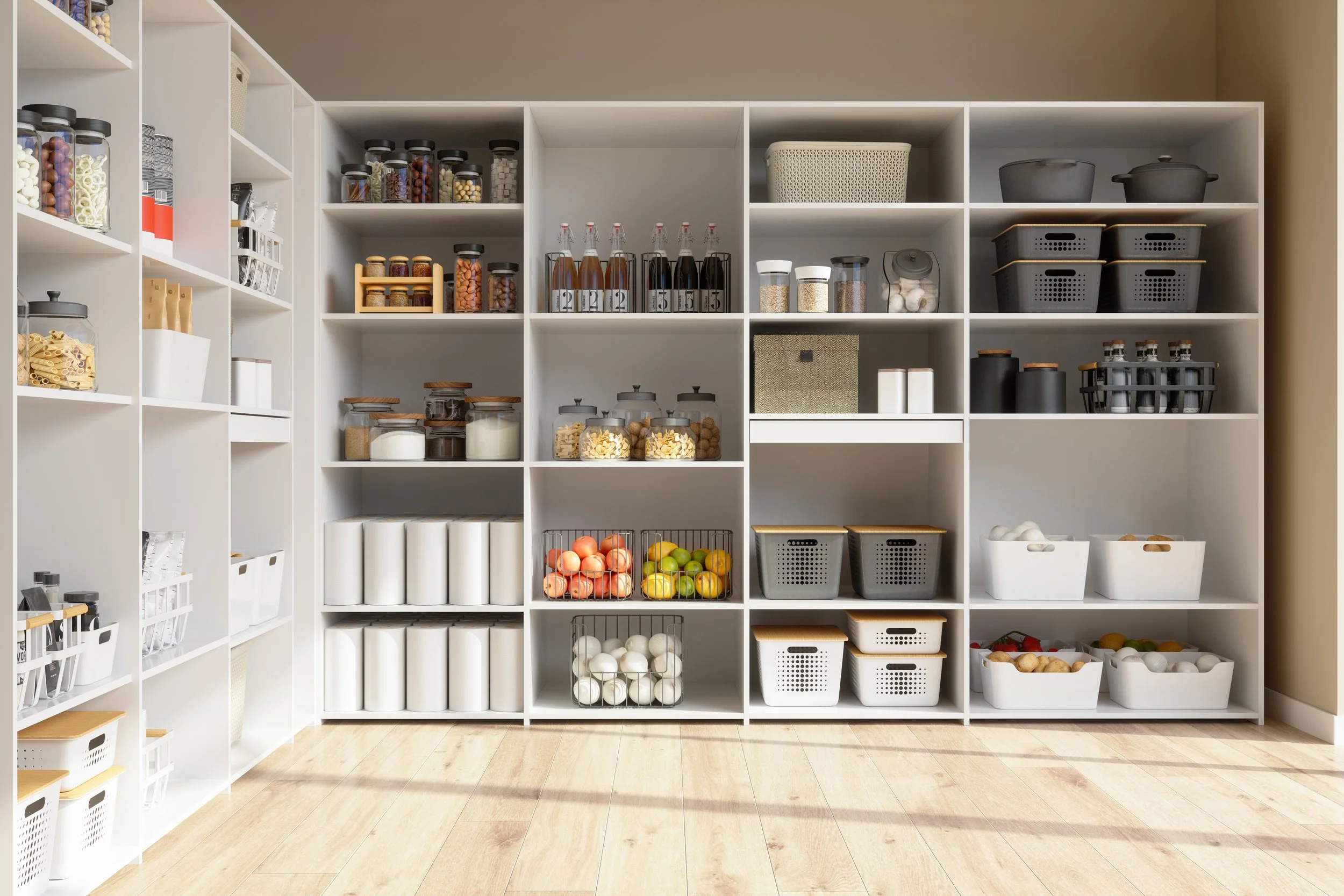
Pantry organization in Toronto featuring labeled containers and zoned food storage shelving

Why Pantry Organization Matters

A disorganized pantry costs far more than most homeowners realize. Duplicate spice jars purchased because the original was hidden behind cereal boxes, forgotten canned goods pushed to the back until they expire, and the frustration of not knowing what you already have before a grocery trip all contribute to unnecessary waste. Effective Pantry Organization solves these everyday challenges by creating clear, easy-to-maintain systems that keep your food visible, accessible, and organized. When everything has a designated place, it's much easier to see what needs replenishing and what you already have in stock.

An organized pantry also transforms meal planning. Instead of spending valuable time searching through crowded shelves or buying duplicate ingredients, you'll know exactly what's available for breakfast, lunch, and dinner. For busy Toronto households balancing demanding careers, family schedules, and long commutes, reducing this daily decision-making can make preparing home-cooked meals feel simpler and more achievable. It's one of the many reasons our Professional Organizer Toronto services focus on creating practical systems that fit naturally into your everyday routine.

The financial benefits are equally important. A thoughtfully organized pantry helps reduce unnecessary grocery spending by preventing duplicate purchases, minimizing expired food, and making weekly shopping more intentional. When your pantry supports your lifestyle instead of working against it, every grocery trip becomes more efficient. Combined with our personalized Home Organization Services Toronto, a professionally organized pantry becomes an investment that saves time, reduces waste, and creates a calmer, more functional kitchen for years to come.

Toronto Pantries: From Condo Cabinets to Walk-In Pantries

No two pantries are the same, which is why successful Pantry Organization Toronto projects always begin by understanding how the space is actually used. Toronto and the Greater Toronto Area feature an incredibly diverse mix of homes, from compact downtown condos to spacious family homes in the surrounding suburbs. Each layout presents unique storage challenges that require customized organization systems rather than one-size-fits-all solutions.

In many condos throughout Downtown Toronto, Scarborough, and Midtown Toronto, there isn't a dedicated pantry at all. Instead, one or two kitchen cabinets must store dry goods, canned foods, baking supplies, snacks, and small appliances. These compact spaces benefit from vertical storage, clear containers, shelf risers, and carefully planned food categories that maximize every available inch. Our Professional Organizer Toronto team often recommends simplifying inventory and creating clearly defined zones to prevent overcrowding.

Semi-detached homes and townhouses across East York, York, and parts of North York frequently include narrow pantry closets. While they offer more storage than a single cabinet, their depth can quickly become a challenge if items disappear behind one another. Pull-out bins, labeled baskets, tiered shelving, and designated food categories help create visibility while making everyday cooking and grocery shopping far more efficient.

Larger homes throughout Ajax, Pickering, Whitby, Markham, Richmond Hill, Vaughan, and other GTA communities often feature generous walk-in pantries. Although additional space is valuable, it can also encourage unnecessary bulk buying and clutter without a structured organization system. Creating dedicated zones for baking supplies, breakfast foods, snacks, canned goods, beverages, meal preparation, and bulk storage ensures every item has a logical home while remaining easy to find.

There's also an often-overlooked middle ground—the closet-style pantry commonly found in semi-detached homes across East York and York. These pantries work best when treated as scaled-down walk-in pantries rather than oversized cabinets. Combining vertical storage techniques with clearly defined organization zones creates a practical system that's easy to maintain, regardless of household size or grocery habits.

At Simplify with Sheeba, every pantry organization project begins with understanding your home, your cooking habits, and your family's daily routine. Through our personalized Home Organization Services Toronto, we design customized pantry systems that reduce clutter, improve accessibility, minimize food waste, and create organized spaces that continue working long after the initial transformation.

💡

Expert Advice

Before purchasing storage bins or pantry containers, complete a full inventory of everything currently in your pantry. Many Toronto homeowners are surprised to discover duplicate spices, unopened food, and expired pantry items simply because they were hidden behind other products. Organizing what you already own first creates a more functional pantry, reduces food waste, and helps you purchase only what you truly need.

⚠️

Signs Your Pantry Needs an Overhaul

A well-organized pantry should make everyday cooking and grocery shopping easier—not more frustrating. If several of the situations below sound familiar, it's probably time to rethink your pantry organization system.

You've discovered expired food multiple times during the past year, sometimes long after the expiry date.

You own duplicate spices, oils, or pantry staples because the originals were difficult to find.

Grocery shopping often happens without knowing what food you already have at home.

Open bags, half-used boxes, and mismatched clips leave food difficult to store and organize.

Items are stacked so deeply that products at the back rarely get used before they expire.

You avoid certain shelves because reaching one item means moving several others first.

💡 Professional Insight

If several of these signs feel familiar, your pantry probably doesn't need more storage—it needs a better organization system. One expired can often signals an entire forgotten section of the pantry. Instead of replacing a single expired item, review everything stored nearby. This simple habit helps reduce food waste, saves money, and keeps your pantry organized for the long term.

Declutter Before You Organize: The Pantry Edition

A successful pantry organization project always starts with decluttering—not containers. Before investing in new storage solutions or labels, simplify what you already own. Working one shelf at a time makes the process manageable and creates a strong foundation for an organization system that lasts.

1

Remove Expired Items

Start with the easiest decisions first. Check expiry dates and safely discard expired food, stale snacks, and pantry items that are no longer usable. This immediately creates more space and makes the remaining inventory easier to evaluate.

2

Consolidate Duplicates

Gather duplicate spices, baking ingredients, grains, and pantry staples into one location. Combine partially used packages whenever possible and eliminate unnecessary duplicates before purchasing additional storage containers.

3

Let Go of One-Time Purchases

Identify specialty ingredients bought for recipes you no longer plan to make. Donating unopened items or discarding unusable products helps create valuable space for foods your household actually uses every week.

4

Organize One Shelf at a Time

Avoid emptying the entire pantry at once. Completing one shelf before moving to the next reduces overwhelm, keeps progress visible, and makes the process much easier to maintain.

5

Sort Uncertain Items Separately

If you're unsure whether to keep something, place it in a temporary review box instead of stopping your progress. Making quick decisions keeps momentum going and prevents small choices from slowing down the entire project.

💡 Professional Organizing Tip

Professional organizers often recommend the "single-decision rule." Touch each pantry item only once whenever possible. Expired food is discarded immediately, duplicates are consolidated, and uncertain items are placed in a review box for later. This simple strategy dramatically reduces decision fatigue while making pantry decluttering faster, easier, and far less overwhelming.

The Simplify with Sheeba Pantry Organization Process

Our pantry organization process is designed to create practical, easy-to-maintain systems that reduce clutter, improve visibility, and simplify everyday cooking and grocery shopping.

STEP 1
Full Inventory
We begin by reviewing everything currently in your pantry, identifying duplicate items, expired products, and overlooked pantry staples before building a customized organization system.
STEP 2
Declutter
Expired food, duplicate purchases, and items that no longer serve your household are removed, creating valuable shelf space for the products you actually use every week.
STEP 3
Create Functional Zones
Instead of organizing alphabetically, we group foods based on how your family cooks and shops—baking supplies, snacks, breakfast items, canned goods, pantry staples, beverages, and specialty ingredients.
STEP 4
Containerize & Label
Clear storage containers and professionally designed labels make every item easy to locate while maintaining a clean, consistent pantry that stays organized over time.
STEP 5
Build Lasting Habits
You'll leave with simple restocking routines and maintenance tips that help your pantry remain organized long after the initial transformation, reducing food waste and simplifying every grocery trip.

Zoning Your Pantry by How You Cook

The most successful pantry organization systems are designed around everyday cooking habits—not rigid food categories. Grouping foods by how your household actually prepares meals makes ingredients easier to find, simplifies grocery shopping, and keeps your pantry organized for the long term.

🥣

Baking Zone

Keep flour, sugar, baking powder, vanilla, chocolate chips, measuring cups, and other baking essentials together so everything you need is within easy reach whenever you're baking.

🍎

Snack Zone

Store grab-and-go snacks, lunch items, and healthy treats together at an accessible height for every member of the household, making busy mornings and after-school routines easier.

🍝

Everyday Staples

Position rice, pasta, canned goods, cooking oils, sauces, and frequently used ingredients on eye-level shelves where they're quick to grab during everyday meal preparation.

🧂

Specialty Items

Seasonal ingredients, specialty baking products, entertaining supplies, and less frequently used items can be stored on higher or lower shelves without slowing down daily cooking.

💡 Professional Organizing Insight

The most efficient pantries aren't organized by alphabetical order—they're organized by frequency of use. Everyday ingredients deserve the most accessible shelves, while specialty items can comfortably live higher, lower, or farther back. Combining activity-based zones with frequency-based placement creates a pantry that's not only beautiful to look at but genuinely faster and easier to use every single day.

Container Systems & Pantry Labels

Choosing the right storage containers and labeling system is one of the simplest ways to create a pantry that's easy to maintain. Visibility, consistency, and accessibility all play an important role in building an organization system that works long after the initial setup.

🫙

Clear Storage Containers

Transparent containers make pantry staples easy to identify at a glance while helping you monitor inventory before items run out. Their uniform shapes also maximize shelf space and create a cleaner, more organized appearance.

🏷️

Consistent Pantry Labels

Clear labels eliminate guesswork, making it easier for everyone in the household to return ingredients to the correct location. They also simplify grocery shopping and keep organization systems consistent over time.

Feature Glass Containers Plastic / Acrylic Containers
Visibility Excellent transparency with long-lasting clarity. Excellent visibility while remaining lightweight.
Durability Highly durable but heavier and breakable. Lightweight, durable, and easier for everyday family use.
Best For Long-term pantry storage and premium kitchens. Busy households, families, and everyday organization.
Maintenance Doesn't absorb food odours and is easy to clean. Easy to clean and practical for frequent use.
Overall Recommendation Ideal for homeowners prioritizing aesthetics and longevity. Excellent balance of functionality, affordability, and convenience.

💡 Professional Organizing Tip

Choose a labeling system that's easy to update as your pantry evolves. Grocery brands, household preferences, and meal routines naturally change over time, so removable or reprintable labels provide far more flexibility than permanent options. The best pantry organization systems aren't just beautiful—they're designed to adapt with your family's everyday life.

PANTRY ORGANIZATION • TORONTO & GTA
Organization
That Lasts.

A beautifully organized pantry shouldn't only look good the day it's finished—it should continue supporting your everyday routine for months and years to come. At Simplify with Sheeba, we create customized pantry organization systems that make cooking easier, reduce food waste, and help your home stay effortlessly organized long after the labels are in place.

Small Pantry & Cabinet Organization for Condos and Starter Homes

Small pantries can be just as functional as large walk-in spaces when every shelf is planned with intention. The key is maximizing visibility, minimizing clutter, and making every inch of storage work harder for your daily routine.

Many condos and starter homes throughout Toronto, Scarborough, East York, and surrounding communities don't include a dedicated pantry. Instead, one or two kitchen cabinets must hold everything from dry goods and canned food to snacks and baking ingredients. Successful pantry organization in these homes depends on smart storage solutions rather than simply adding more containers.

Door-mounted organizers, stackable storage containers, shelf risers, and uniform food bins help maximize vertical space while keeping ingredients easy to find. Every shelf should support the way your household shops and cooks rather than becoming overcrowded with items that rarely get used.

Bulk shopping also requires careful consideration. While buying larger quantities can reduce grocery costs, oversized packages often consume valuable cabinet space and quickly create clutter in smaller kitchens. Choosing practical quantities that fit comfortably within your available storage usually creates a more functional pantry in the long run.

Smart Space Solutions

  • Install door-mounted racks for spices, snacks, and smaller pantry items.
  • Use clear, stackable containers to maximize every shelf.
  • Group similar foods together using simple pantry zones.
  • Store everyday ingredients at eye level for faster meal preparation.
  • Purchase bulk items only when your storage space can comfortably support them.
💡 Professional Organizing Tip

If you enjoy warehouse shopping, consider splitting bulk purchases with friends, neighbours, or family members. You'll still benefit from lower prices without sacrificing valuable pantry space—a practical strategy that's especially popular in Toronto condo communities.

Walk-In Pantry Organization for Larger Homes

A spacious pantry provides incredible storage potential, but without thoughtful organization it can quickly become just a larger version of everyday clutter. The goal isn't simply adding more shelves—it's creating clearly defined zones that support the way your household shops, cooks, and stores food.

Creating an Efficient Walk-In Pantry

Many homes throughout Etobicoke, North York, Scarborough, Ajax, Pickering, Whitby, and other GTA communities include generous walk-in pantries. While extra storage is valuable, larger spaces can encourage unnecessary bulk purchases and scattered organization unless every shelf has a clearly defined purpose.

Assigning dedicated zones for baking ingredients, canned goods, breakfast items, snacks, beverages, meal-prep essentials, and small appliances keeps similar products together while making everyday cooking significantly more efficient. Floor space should remain intentional as well, using storage bins or shelving units instead of becoming a catch-all for oversized packages and overflow groceries.

Your Pantry Blueprint

🥣

Baking Zone

Store flour, sugar, baking supplies, and mixing essentials together for quick access.

🥫

Pantry Staples

Keep pasta, rice, canned goods, oils, and sauces on easily accessible shelves.

🍪

Snack Station

Create a dedicated section for snacks and lunch items that everyone can reach.

📦

Bulk Storage

Reserve lower shelves or floor bins for bulk purchases while keeping them organized and easy to access.

💡 Professional Organizing Tip

Lighting is one of the most overlooked features in walk-in pantries. Battery-powered LED strip lights installed beneath shelves dramatically improve visibility, making labels easier to read and helping prevent forgotten food from disappearing into dark corners.

Expiry Tracking & Reducing Food Waste

A visible, well-organized pantry naturally makes expiry tracking easier because every item is easy to see and rotate. Following a simple first-in, first-out (FIFO) system by placing newly purchased items behind existing stock helps ensure older products are used before they expire. For households that frequently discover expired food, setting aside just five minutes each month to review pantry shelves can prevent unnecessary waste and reduce duplicate purchases.

Grouping foods with similar shelf lives together also makes pantry maintenance more efficient. Long-lasting staples like canned goods, rice, and pasta require less frequent attention, while spices, opened packages, and shorter shelf-life products should remain at the front where they're easier to monitor. This practical zoning system keeps ingredients visible, simplifies meal planning, and helps reduce food waste throughout the year.

💡 Quick Tip: During your monthly pantry check, move older products to the front and place newly purchased items behind them. This simple habit keeps food rotating naturally and helps prevent forgotten items from expiring.

Organizing Bulk Buys & Warehouse Shopping

Buying in bulk can save money, but oversized packaging often creates unnecessary clutter when it doesn't fit your pantry. Transferring bulk purchases into uniform storage containers immediately after shopping keeps your pantry organized, improves visibility, and makes everyday cooking much easier.

It's equally important to manage the packaging itself. Large cardboard boxes and plastic tubs frequently occupy valuable storage space long after their contents have been transferred. Recycling unnecessary packaging right away helps maintain a cleaner, more efficient pantry.

✅ Best Practices

  • Transfer bulk food into clear, uniform containers.
  • Label every container with the product name and purchase date.
  • Store only the quantity your pantry can comfortably hold.
  • Recycle oversized packaging immediately.
  • Rotate older inventory to the front.

❌ Avoid These Mistakes

  • Keeping oversized boxes inside the pantry.
  • Mixing opened and unopened packages together.
  • Buying more than your pantry can realistically store.
  • Holding onto empty containers "just in case."
  • Stacking bulky items where they're difficult to access.
💡 Professional Tip: Bulk shopping should simplify your pantry—not overwhelm it. Purchase larger quantities only when you have a designated storage system that keeps every item visible, organized, and easy to access.

Pantry Organization for Families with Kids

A family-friendly pantry should make everyday routines easier for both parents and children. Creating dedicated snack zones, using clear labels, and encouraging simple organization habits helps everyone find what they need while keeping the pantry organized long-term.

🧃

Create a Kid-Friendly Snack Zone

Place healthy snacks and lunch items on lower shelves where children can safely reach them on their own. Clear bins with simple picture labels or easy-to-read labels help younger family members identify what's inside while encouraging independence. Keep baking ingredients, sharp tools, and specialty cooking items on higher shelves to maintain both safety and organization.

🌟

Build Simple Organization Habits

Invite children to help restock their snack bin each week and return items to their designated place after use. This small routine creates a sense of ownership, teaches organization skills, and helps the pantry stay organized without relying on one person to manage the entire system.

💡 Family Tip: Keep your most frequently used snacks together in one clearly labeled basket. When every family member knows exactly where snacks belong, it's much easier to maintain an organized pantry throughout the week.

Pantry Organization for Dietary Restrictions & Multiple Diets

Managing multiple dietary needs becomes much easier when every category has a clearly defined place. Separate pantry zones, consistent labels, and simple color-coding help reduce confusion, improve meal preparation, and make it easier for every member of the household to confidently find the right ingredients.

Dietary Need Recommended Organization System
🌾 Gluten-Free Foods Store on a dedicated shelf or in clearly labeled containers to reduce the chance of accidental mixing.
🥗 Vegetarian or Vegan Items Create a separate pantry zone for plant-based staples, proteins, and specialty ingredients.
🥜 Food Allergies Keep allergen-containing foods on a clearly marked shelf away from allergy-friendly products.
👨‍👩‍👧 Shared Household Use color-coded bins or labels so everyone can quickly identify the correct pantry section.
🧒 Children's Special Diets Review pantry zones regularly with family members to ensure products remain organized and easy to identify.
💡 Professional Organizing Tip: Color-coded labels are one of the easiest ways to support households managing multiple dietary needs. They provide instant visual recognition, helping every family member confidently return ingredients to the correct location while reducing the risk of accidental mix-ups.

Shelf & Door Storage Solutions

The right storage solutions help maximize every inch of pantry space while making everyday items easier to reach. Adjustable shelving, pull-out organizers, and door storage create a pantry that's flexible, functional, and easy to maintain as your household's needs change.

📏 Adjustable Shelves

Customize shelf heights to fit everything from tall bottles to small cans without wasting vertical space.

🗄️ Pull-Out Shelves

Bring deep pantry items forward so everything stays visible and easy to access.

🚪 Door Organizers

Use pantry or cabinet doors for spices, seasoning packets, and small jars without taking up shelf space.

📦 Smart Shelf Planning

Measure your tallest and shortest pantry items before adjusting shelves to maximize storage efficiency.

Seasonal Pantry Rotation

Your pantry should evolve with the seasons. A quick review every few months helps keep ingredients relevant, prevents expired food from accumulating, and ensures your storage space reflects the meals your household is preparing throughout the year.

🌸 Spring

  • Clear out holiday baking supplies.
  • Check expiry dates.
  • Donate unopened items you won't use.

☀️ Summer

  • Make room for lighter pantry staples.
  • Organize snacks for outdoor activities.
  • Store preserves and seasonal produce.

🍂 Fall

  • Restock baking ingredients.
  • Prepare soup and pantry staples.
  • Review bulk purchases before winter.

❄️ Winter

  • Organize holiday cooking essentials.
  • Rotate older pantry items forward.
  • Use seasonal ingredients before spring.
💡 Seasonal Organizing Tip: Schedule a pantry refresh at the beginning of each season. Reviewing ingredients, rotating older products, and removing items you no longer use helps reduce food waste while keeping your pantry organized all year long.

DIY vs. Professional Pantry Organization

Factor DIY Pantry Organization Professional Pantry Organization
Container Sizing Containers are often purchased before decluttering, resulting in mismatched sizes and inefficient use of pantry space. Storage containers are selected only after a complete inventory and decluttering process, ensuring the perfect fit for every shelf.
Organization Method Pantries are commonly organized by food category instead of how the household actually cooks and shops. Every zone is designed around your family's cooking habits, grocery routine, and daily lifestyle for long-term success.
Labeling System Labels are often inconsistent or added over time, making the system difficult for everyone in the household to follow. A consistent, clearly labeled system makes every item easy to locate and simple for every family member to maintain.
Time Required Can take several hours—or even an entire day—depending on pantry size, planning, and trial-and-error. Completed through a structured, efficient process that minimizes stress and maximizes long-term organization.
Food Waste Expired or duplicate items are more likely to go unnoticed because visibility and rotation are inconsistent. Clear zones, proper rotation, and inventory visibility help reduce food waste and unnecessary grocery purchases.
Long-Term Maintenance Organization often declines after a few weeks because no maintenance system has been established. A customized organization system with simple maintenance habits keeps the pantry functional for the long term.
PANTRY ORGANIZATION • TORONTO

How Much Does Pantry Organization Cost?

Every pantry is different, which is why professional pantry organization is never based solely on shelf count. The investment depends on the size of the pantry, the amount of decluttering required, and the level of customization needed. A small cabinet pantry naturally requires less time than a fully customized walk-in pantry with storage containers, labels, and dedicated organization zones.

01
Pantry Size

Compact cabinet pantries typically require less planning, while larger walk-in pantries involve additional storage zones, containers, and organization systems.

02
Decluttering

Years of accumulated food, duplicate purchases, and expired products often require additional sorting before a long-lasting organization system can be installed.

03
Customization

Custom labels, premium storage containers, shelving solutions, and personalized pantry zones create an organization system designed specifically for your home and lifestyle.

Every Pantry Is Unique.

The most accurate estimate always begins with a consultation. During this conversation, we assess your pantry's size, current condition, storage goals, and daily routines before recommending a customized organization plan. This ensures your investment reflects the work your pantry actually requires—not simply the number of shelves it contains.

Keep Your Pantry Organized for the Long Term

An organized pantry isn't about perfection—it's about creating simple systems that are easy to maintain. Avoiding a few common mistakes and building small weekly habits will help your pantry stay functional long after the initial organization project is complete.

Common Pantry Organization Mistakes

  • Buying containers first. Always declutter before purchasing storage containers.
  • Organizing by category alone. Build zones around how your household actually cooks and shops.
  • Skipping labels. Every family member should easily understand the system.
  • Overbuying bulk products. Purchase only what your pantry can comfortably store.
  • Ignoring food rotation. Older products should always be used before newly purchased items.
  • Treating organization as a one-time project. Small maintenance habits are what keep a pantry organized.

Simple Maintenance Habits

  • Place new groceries behind existing products using the First-In, First-Out (FIFO) method.
  • Spend five minutes each month checking expiry dates.
  • Transfer bulk purchases into labeled containers after shopping.
  • Refill containers before they become completely empty.
  • Review pantry zones every few months as your household's needs change.
  • Finish every grocery trip with a quick five-minute pantry reset.
Professional Organizing Insight: The most successful pantry organization systems aren't maintained through perfection—they're maintained through consistency. A few simple habits repeated every week will always outperform an elaborate system that's only revisited once or twice a year.
PANTRY ORGANIZATION • MEAL PREP

Organized Pantry.
Simpler Meal Planning.

An organized pantry transforms meal preparation from a daily challenge into a simple routine. When ingredients are clearly visible and grouped by how your household actually cooks, planning meals becomes faster, grocery shopping becomes more intentional, and unnecessary food waste naturally decreases.

01

See Everything

Clear organization makes pantry staples easy to find, allowing you to build weekly meals around ingredients you already have instead of buying unnecessary duplicates.

02

Plan Smarter

Create a dedicated "This Week" pantry zone for ingredients already assigned to upcoming meals. Keeping these items together reduces confusion and makes weeknight cooking far more efficient.

03

Reduce Waste

Better visibility means older ingredients are used before new purchases, helping your household minimize food waste while making grocery shopping more predictable.

Professional Organizing Insight: The most organized kitchens don't begin with meal prep—they begin with a pantry that makes every ingredient visible, every zone intentional, and every shopping trip more efficient.

SIMPLIFY WITH SHEEBA

Choosing the Right
Professional Organizer

The best pantry organization systems are never built from a template. Every household shops differently, cooks differently, and stores different ingredients. Choosing a professional organizer means choosing someone who understands your routines first—and designs a system that works naturally around them.

A Personalized Approach

From compact condo cabinets to large walk-in pantries across Toronto and the GTA, Simplify with Sheeba creates organization systems tailored to your home, your pantry, and your everyday routine. Container selection, labels, storage solutions, and pantry zones are thoughtfully planned after a complete assessment—not before.

Designed Around Your Lifestyle

Whether your household manages food allergies, follows multiple diets, prepares cultural dishes, or cooks in large batches every week, every pantry should reflect the way you actually live. A customized organization system is easier to maintain because it's designed specifically for your family's habits—not a one-size-fits-all solution.

The goal isn't simply an organized pantry.
It's creating a space that supports the way your family shops, cooks, gathers, and lives—every single day.

TORONTO • GTA • DURHAM REGION

Areas We Proudly Serve

Simplify with Sheeba provides professional pantry organization, home organization, decluttering, packing, unpacking, and customized organizing services throughout Toronto, Durham Region, and communities across the Greater Toronto Area.

PANTRY ORGANIZATION FAQ

Frequently Asked Questions

Find answers to some of the most common questions about pantry organization, storage systems, and professional organizing services in Toronto and the Greater Toronto Area.

Every pantry is unique, so pricing depends on pantry size, the amount of decluttering required, and whether storage containers or labels are included. Most professional organizers provide a customized estimate after assessing your pantry and understanding your organization goals.
Yes. Removing expired food, duplicate items, and products you no longer use creates a better foundation for an organization system that's easier to maintain and more efficient in the long run.
Clear, stackable containers are often the best choice because they improve visibility, maximize shelf space, and make it easy to monitor pantry inventory while creating a consistent, organized appearance.
Use vertical storage, door-mounted organizers, stackable containers, and dedicated pantry zones to maximize every inch of available cabinet space while avoiding unnecessary bulk purchases.
A quick monthly review is usually enough to rotate pantry items, remove expired products, and ensure older ingredients are used before newly purchased items.
Absolutely. Walk-in pantries benefit from customized storage zones, clear labeling, inventory management, and organization systems that keep larger spaces functional and easy to maintain.
Separate food categories using clearly labeled zones, color-coded containers, and dedicated shelves to help prevent mix-ups and make meal preparation safer and more efficient.
Pantry organization focuses on food storage, inventory management, container systems, and expiry tracking. Kitchen organization includes the entire kitchen, such as cabinets, drawers, countertops, cookware, and workflow optimization.
FINAL THOUGHTS

An Organized Pantry Is
An Investment in Everyday Living.

A pantry that stays organized does far more than create neat shelves. It helps reduce duplicate grocery purchases, minimizes food waste, simplifies weekly meal planning, and makes everyday cooking feel less stressful. Whether you're organizing a compact condo cabinet in Toronto or a spacious walk-in pantry in the Greater Toronto Area, the same principles remain true—declutter first, organize around how your household actually cooks, and create simple systems that are easy to maintain over time.

The most successful pantry organization systems aren't built around perfection—they're built around consistency. When every item has a clear home, ingredients remain visible, and restocking becomes effortless, maintaining an organized pantry requires far less effort than constantly reorganizing one that's become cluttered. Thoughtful organization isn't about owning more containers; it's about creating a space that naturally supports the way your family shops, cooks, and lives every day.

SIMPLIFY WITH SHEEBA
Designed Around
The Way You Live.

A beautifully organized pantry is more than an aesthetic upgrade. It's a thoughtfully designed system that simplifies daily routines, reduces food waste, and makes every grocery trip, meal, and morning feel easier. Whether you're organizing a compact condo pantry or a spacious walk-in pantry, we'll create a personalized solution designed around the way you live, cook, and shop.

Book Your Consultation


Home Organization Services Toronto: The Complete Guide for the GTA

Searching for reliable home organization services in Toronto usually means one of two things: you're standing in a space that no longer works for you, or you're simply tired of maintaining order alone. Either way, you've landed in the right place. This guide is built to be the single most complete resource on the subject — covering every room, every service, every cost question, and every "is this actually worth it" doubt that comes up before someone books their first consultation.

Toronto is a city of contrasts when it comes to home storage — compact condos Downtown, character homes with quirky closets in Leslieville and Riverdale, and larger family properties spread across North York, Scarborough, and the outer GTA. Home organization services have to flex to fit all of it, and that's exactly what this guide walks through: what these services actually include, how they're priced, and how Simplify with Sheeba approaches every project — from a single junk drawer to a full-home reset, at every budget and every stage of a household's life.

What Are Home Organization Services?

Home organization services are professional, hands-on solutions that help households declutter, design, and install functional storage systems throughout their home. The scope ranges widely — a single closet, a full kitchen, an entire house before a move, or an ongoing seasonal maintenance relationship. What ties every version of the service together is the same underlying goal: matching your storage to how you actually live, not to a generic ideal borrowed from a magazine spread.

Unlike a cleaning service, which resets the visible surface of a home, home organization services address the underlying volume and structure of your belongings — sorting, decluttering, space planning, and installing labeled systems designed to hold up under daily use, not just look good on the day they're finished.

Are Professional Home Organization Services Worth It?

This is one of the most common hesitations before booking, and it's a fair one. The honest answer: for most households juggling work, family, and a home that keeps outpacing their available time, yes — professional organization services typically pay for themselves in time saved, reduced daily stress, and fewer repeat purchases of items you already owned but couldn't find.

The value isn't just in the finished space. It's in skipping the trial-and-error most people go through alone — buying the wrong bins, organizing by the wrong logic, and eventually giving up when the system doesn't hold. A professional brings both the objectivity to make faster decisions and the experience to design a system that's built around your actual routines from day one.

It's also worth reframing what "worth it" actually means here. The return isn't only measured in hours saved searching for misplaced items, though that's real. It shows up in less tangible ways too — fewer arguments about whose responsibility a messy space is, less guilt about unused purchases sitting in plain sight, and a home that finally feels like it reflects the people living in it rather than working against them. For many clients, that shift in how the home feels day to day ends up mattering more than the organizing itself.

What Does a Home Organizer Do?

A home organizer partners with you to understand your space, your habits, and your goals, then builds a system around all three. In practice, that includes:

  • An initial consultation and walkthrough to assess the space and priorities

  • Guided decluttering — sorting into keep, donate, sell, and recycle categories

  • Space planning, measurements, and product or storage recommendations

  • Installing zoned, labeled systems designed around daily use

  • Coordinating donation drop-off and responsible disposal

  • Leaving behind a simple maintenance plan so the system lasts

A skilled professional organizer also acts as a calm, judgment-free presence throughout — many of the decisions involved in organizing a home are more emotional than logistical, and that steady, patient support matters just as much as the physical result you can see and touch once the project is finished.

It's worth distinguishing this role from a general handyman or cleaning service, since the three are sometimes confused. A cleaner addresses surface tidiness and hygiene. A handyman installs fixed elements like shelving or closet rods. A home organizer sits between the two, focused specifically on the volume, placement, and system behind your belongings — the layer of the home that determines whether a space stays functional day after day, not just on the day it's cleaned or built.

Expert Tip: The best home organizers ask about your routine before they ask about your storage. A closet organized around how you actually get dressed each morning will always outperform one organized purely by clothing category.

Why Toronto Homes Need Professional Organization

Toronto's housing stock creates organizing challenges that are genuinely unique to this city. Condo living Downtown and in Midtown Toronto means every square foot has to work harder than in a suburban home. Character homes in Riverdale, Leslieville, and The Beaches often come with charming but impractical original closets never designed for a modern household's volume of belongings. Meanwhile, larger properties in North York, Etobicoke, and Scarborough can quietly accumulate clutter in spare rooms, basements, and garages for years before it becomes unmanageable.

Add to that a few broader lifestyle shifts — hybrid work turning spare rooms into permanent offices, busy dual-income households with less time for upkeep, and a growing cultural preference for simplified, intentional living — and it's easy to see why demand for home organization services in Toronto keeps climbing across every kind of property in the GTA.

There's also a generational shift worth noting. Younger GTA homeowners, many furnishing a first home or condo from scratch, are increasingly building organization into the process from the start rather than retrofitting it years later. Meanwhile, longtime homeowners in neighborhoods like Don Mills or Forest Hill are often organizing decades of accumulation for the first time, frequently ahead of a downsize or a move. Both situations point to the same conclusion: organization isn't a luxury reserved for a particular life stage — it's relevant at every point in a home's life, from move-in day to the day you eventually move out.

Benefits of Professional Home Organization

Beyond the obvious visual transformation, professional organization delivers benefits that show up in daily life long after the project ends:

  • Time saved daily. Finding what you need in seconds instead of minutes adds up to real hours over a year.

  • Reduced decision fatigue. Fewer, better-placed belongings mean fewer small decisions competing for your attention each day.

  • Lower stress. Cluttered visual environments are consistently linked to higher stress; calmer spaces tend to produce calmer households.

  • Better use of existing space. Smart systems often free up square footage without any renovation at all.

  • Fewer duplicate purchases. When you can see and access what you own, you buy less of what you already have.

  • Smoother household operations. Shared systems mean every family member — not just the person who organized it — can maintain the space.

The numbers back this up. Surveys on household clutter consistently find that the average person spends a meaningful chunk of time each week simply searching for misplaced items — time that's recovered almost immediately once a proper system is in place. Environmental psychology research has also linked visually cluttered spaces to measurably higher stress markers, which helps explain why so many clients describe feeling calmer within days of a project, often before the space is even fully finished.

Create Space for What Matters.

A calmer, more functional home is closer than you think. Book a consultation with Simplify with Sheeba and see what's possible for your space.

Book Your Consultation

The Simplify with Sheeba Step-by-Step Process

Every project follows the same reliable framework, adjusted to the scope of your space:

Step 1: Consultation

We start with a conversation, not a checklist — understanding your routines, frustrations, and what "done" looks like for your household. This is also when scope and timeline get set, so there are no surprises once the project begins.

Step 2: Declutter

Belongings are sorted into clear categories, with compassionate support for sentimental or difficult decisions, so momentum never stalls. This step alone is often responsible for the majority of a room's transformation, well before any storage product is introduced.

Step 3: Plan the Space

Measurements, zoning, and product recommendations are mapped out around your actual habits — not a generic layout. A closet plan for someone who works from home looks different from one for someone commuting daily, and that distinction matters.

Step 4: Install the System

Labeled, zoned storage is installed room by room, with everything returned to a spot designed for how you'll actually use it. Nothing goes back to its old spot by default — every placement is a deliberate choice.

Step 5: Maintain

You leave with simple, sustainable habits — not rigid rules — so the system holds up through real, busy life. Many clients also schedule a brief seasonal check-in to keep the system tuned as routines evolve.

Storage Solutions & Custom Organization Systems

Storage solutions and custom organization systems are what turn a decluttered space into a lasting one. Off-the-shelf bins and shelving can work well for straightforward spaces, but many Toronto homes — particularly condos with irregular closets, character homes with non-standard dimensions, or households with very specific storage needs — benefit from systems built or selected specifically for the space rather than adapted from a generic product line.

A well-designed custom system typically accounts for a few things a generic solution often misses: the exact dimensions of the space, including awkward corners and sloped ceilings; the actual weight and shape of what's being stored, rather than a standard assumption; and how the system will be accessed daily, since even a beautifully built system fails if it's inconvenient to use. This is also where product recommendations matter most — matching a container's material, size, and label style to how a household will genuinely interact with it, rather than choosing based on appearance alone.

Custom systems tend to be most valuable in kitchens with deep or oddly shaped cabinets, closets with sloped ceilings common in older Toronto homes, and multi-purpose rooms that need to transition cleanly between functions, like a guest room that doubles as a home office. In each case, the investment in a tailored system pays off in exactly the way generic storage often doesn't: it keeps working years later, not just for the first few weeks.

Whole Home Organization

Whole home organization is our most comprehensive service, ideal for households that have accumulated clutter over several years, families going through a major life change, or anyone who wants their entire home — not just one room — to finally function the way it should. Projects are phased by room or zone so progress feels steady and visible rather than overwhelming, and each phase builds on the momentum of the last.

Closet Organization

Closet organization is one of the highest-demand services across the GTA, and for good reason — a closet touches your morning routine every single day. A well-executed project includes zoning by category and frequency of use, seasonal rotation systems, matching hangers for visual calm, and labeled bins for shoes and accessories. Compact condo closets Downtown often benefit most from custom vertical inserts, while larger walk-in closets in Forest Hill or Leaside homes get the most value from full space planning across multiple household members.

Beyond the visible hanging space, a thorough closet project also addresses the areas people tend to overlook — the shelf above the hanging rod, the floor space beneath, and any awkward corners created by the room's original layout. These forgotten zones often hold a surprising share of a closet's clutter, and giving them a deliberate purpose is frequently what separates a genuinely functional closet from one that simply looks tidy on the surface.

Kitchen & Pantry Organization

The kitchen is the busiest room in most homes, which makes kitchen organization and pantry organization among our highest-impact projects. Effective systems zone cabinets by task, use clear labeled pantry containers so inventory is visible at a glance, add drawer dividers for utensils and tools, and install pull-out shelving for deep or awkward cabinets. Families in North York and Scarborough with larger kitchens often benefit from a full pantry build-out, while Downtown Toronto condo kitchens usually need smarter vertical and drawer-based solutions instead.

A properly organized pantry also does something less obvious but equally valuable: it reduces food waste. When items are visible and grouped by category rather than buried behind duplicates, it becomes far easier to notice what's about to expire and use it before it doesn't. Many households discover, once a pantry project is finished, that they'd unknowingly been buying duplicates of pantry staples for months simply because the originals were impossible to see.

Garage Organization

Garage organization restores a room that too often becomes a catch-all. A well-designed system includes wall-mounted storage to free up floor space, labeled zones for seasonal and sports equipment, and enough clearance that the car can actually park inside — a real priority through Toronto winters. This service is especially popular in Etobicoke, Don Mills, and York, where larger properties tend to let garages slide into overflow storage over time.

Because garages serve so many overlapping purposes — vehicle storage, workshop, seasonal archive, sports equipment locker — the most effective systems separate these functions clearly rather than letting them blend into one undifferentiated pile. A dedicated tool wall, elevated shelving for anything that shouldn't sit on a damp floor, and clearly labeled bins for holiday decor all make a meaningful difference in how usable the space feels day to day.

Home Office Organization

With hybrid work now permanent for many professionals, home office organization has become a daily productivity issue rather than a spare-room afterthought. Systems typically separate active from archived paperwork, manage cables for a visually calm desk, and create dedicated zones for supplies — all designed to support focus rather than distraction, especially in homes where the office shares space with another room's function.

A detail worth planning for is the transition between work and the rest of the day. A simple "landing zone" for a laptop, badge, or headset at day's end helps work stay contained to its designated space rather than quietly spreading across the kitchen table or living room by evening — a small addition that makes a noticeable difference in households where the line between work and home life has become blurry.

Bathroom & Laundry Room Organization

Bathroom organization and laundry room organization are often the fastest wins in a project — small, high-traffic spaces where drawer dividers for toiletries, labeled under-sink bins, and a linen system organized by size make an outsized daily difference. Laundry rooms benefit from separating sorting, washing, and folding zones so the whole process takes less mental effort from start to finish.

Bedroom Organization

Bedroom organization focuses on the room meant for rest, which makes clutter here especially disruptive. Systems typically address clothing storage, clear nightstand and dresser surfaces of catch-all clutter, and make use of often-forgotten under-bed storage — the goal being a room that feels calm the instant you walk in, at the start and end of every day.

Playroom Organization

Playroom organization is built around independence — low, labeled bins with pictures let even young children put things away themselves, while rotating toy systems keep the space fresh without adding volume. Families across the GTA consistently report that a well-designed playroom removes one of the most persistent daily sources of household stress.

Basement Organization

Basement organization tends to be the single largest project in many GTA homes, since basements quietly absorb overflow from every other room in the house for years. A thorough basement project declutters first, then zones the space clearly — seasonal storage, tools, memorabilia, and anything genuinely archival — often reclaiming enough usable square footage to change how a family uses their entire lower level.

Basements also tend to be where decluttering decisions are hardest, simply because so many items stored there were relocated from elsewhere in the home rather than chosen intentionally for that space. A structured basement project revisits those decisions directly, rather than simply reshuffling the same volume of belongings into slightly neater piles — which is the trap most solo basement clean-outs fall into.

Tip: Basements and garages go faster when tackled in defined zones rather than all at once. Clearing one wall completely builds visible momentum that carries you through the rest of the space.

Paper Organization Systems

Paper organization is one of the most underestimated sources of household stress. A strong system separates documents into action-needed, reference, and archive categories, uses a simple filing structure every household member can follow, and includes a single clear point of entry for mail — often paired with light digital scanning so paperwork stops accumulating the moment the project ends.

Your Organized Home Starts Here.

Whether it's one room or the whole house, Simplify with Sheeba builds systems designed around your real life. Let's talk about your space.

Get Started

Packing, Unpacking & Move Management

Do home organizers help before moving? Absolutely — and it's one of the highest-value times to bring in professional support. Packing services, unpacking services, and full move management combine pre-move decluttering with systematic, labeled packing, so you're not paying to move things you don't need. On the other end, full unpacking sets up closets, kitchens, and daily essentials so the new home is functional from day one, rather than living out of boxes for weeks — a service in strong demand across GTA relocations, from a Mississauga condo into a Vaughan family home or Downtown Toronto into North York.

A Simple Pre-Move Organization Checklist

  • ☐ Declutter each room before a single box is packed — never pack something you already know you'll donate

  • ☐ Sort belongings into keep, donate, sell, and recycle before packing day arrives

  • ☐ Label every box by room and by priority, not just by contents

  • ☐ Pack a clearly marked "first night" box with essentials for the new home

  • ☐ Coordinate donation pickup or drop-off before moving day so items don't end up making the trip anyway

  • ☐ Plan the new home's storage zones before unpacking begins, so items go to their final spot the first time

Following this order — declutter, then pack, then unpack into a planned system — consistently produces a faster, calmer move than packing everything first and sorting it out later at the new address.

Downsizing & Estate Organization for Seniors

Downsizing services and estate organization call for a different kind of care — often involving decades of accumulated belongings and real emotional weight. A thoughtful process moves at a patient pace, respects a senior's own decisions rather than overriding them, and sorts belongings into keep, gift-to-family, donate, and sell categories. Having a neutral, compassionate professional in the room frequently reduces family tension during what can otherwise be one of the more difficult transitions a household faces.

Family dynamics often add a layer of complexity that's easy to underestimate going in. Adult children may have differing opinions about what should be kept, sold, or passed down, and those disagreements can become more emotionally charged than the sorting itself. A professional presence gives the process a neutral center of gravity — decisions get made because they make sense for the space and the senior's own wishes, not because one family member's voice was loudest in the room.

Seasonal Organization

Seasonal organization is an increasingly popular way for GTA households to stay ahead of clutter rather than waiting for a full reset every few years. A light seasonal check-in — rotating clothing and gear, refreshing the pantry, revisiting storage areas — keeps a home's systems working year-round and catches small pockets of clutter before they grow into a bigger project.

What Rooms Should I Organize First?

For households tackling a project in phases, order matters. Here's a practical sequence that tends to build the most momentum:

  1. Entryway or mudroom — high traffic, high visibility, quick to transform

  2. Main closet — daily impact on mornings, usually a fast win

  3. Kitchen — the room used most often by the whole household

  4. Bathroom — small enough to complete quickly, satisfying to finish

  5. Home office — especially valuable for hybrid or remote workers

  6. Bedrooms — restores calm to the most personal spaces in the home

  7. Playroom — high daily impact for families with young children

  8. Garage — larger project, tackled once momentum is established

  9. Basement — typically the largest undertaking, saved for last

This order isn't a rigid rule — it's simply the sequence that tends to keep a household motivated through a multi-phase project, since visible wins early on make the harder spaces feel far more manageable later.

How Much Do Home Organization Services Cost in Toronto?

Pricing for home organization services in Toronto depends on several factors:

  • Scope — a single closet costs considerably less than a whole-home project

  • Volume of belongings and decluttering required — more accumulation generally means more time

  • Number of organizers on the project — larger jobs often move faster with a small team

  • Products and custom storage — typically quoted separately from labor

  • Add-on services — packing, unpacking, and move coordination are scoped individually

Most Toronto organization companies price by the hour or by session. Broadly, projects fall into a few tiers:

  • Single-space projects (a closet, pantry, or home office) — the most affordable entry point, often completed in a few hours.

  • Multi-room projects (a kitchen plus a garage, or several closets) — a moderate investment, typically spread across one or two visits.

  • Whole-home organization — the most comprehensive option, usually phased across multiple sessions and paired with a maintenance plan.

  • Move-related organization — scoped around the timeline and volume of a relocation, often combined with packing and unpacking services.

Because every home and every household's volume of belongings differs, the most accurate way to understand your investment is a personalized quote following a consultation — not a generic online estimate. Many clients also choose to start with a single space before expanding into a larger, whole-home engagement, which is a perfectly reasonable way to test the process before committing to a bigger project.

Home Organization Before Moving vs. After Moving

One of the most common questions we hear is whether to organize before a move or wait until you're settled into the new home. Here's how the two approaches actually compare:

FactorOrganizing Before MovingOrganizing After MovingMoving costsLower — you only pay to move what you're keepingHigher — clutter and unwanted items get moved tooUnpacking experienceFaster — you're unpacking only what you've already decided to keepSlower — decluttering and unpacking happen at the same timeNew home setupFunctional almost immediatelyCan take weeks to feel settledEmotional loadSpread out, tackled in the familiar old spaceCompounded — sorting decisions happen amid moving fatigueRisk of re-clutterLower — old clutter doesn't make the tripHigher — unresolved clutter often just gets unpacked into the new space

Both approaches can work, but organizing before a move consistently produces a calmer transition and a new home that feels settled far sooner — which is why it's the approach we recommend whenever the moving timeline allows for it. That said, organizing after a move isn't a failure — sometimes a tight timeline simply doesn't allow for a full pre-move project, and in those cases, scheduling organization services within the first few weeks of settling in still prevents clutter from establishing itself in the new space before it has a chance to take hold.

Common Mistakes to Avoid When Organizing Your Home

Even highly motivated homeowners tend to run into the same handful of pitfalls when organizing solo. Recognizing these patterns early is often the difference between a project that sticks and one that quietly unravels within a few months:

  • Buying storage before decluttering. Bins purchased first are almost always the wrong size, because no one yet knows what's actually staying. This is the single most common — and most expensive — mistake, since it often means a second round of purchases once the real volume becomes clear.

  • Organizing by category instead of routine. A "logically" sorted closet doesn't always match how someone actually gets dressed, which means the system looks orderly on day one but stops being followed within weeks.

  • Skipping the decision layer. Moving clutter from a visible surface into a drawer isn't organizing — it's hiding, and it resurfaces the moment that drawer fills up too.

  • No labeling system. A system only one person understands collapses the moment anyone else in the household needs to find something, which shifts the maintenance burden entirely onto whoever set it up.

  • Treating it as a one-time event. Even a great system needs light, ongoing maintenance to hold up over time — expecting a single weekend effort to last indefinitely sets the whole project up to fail.

  • Ignoring the emotional layer. Rushing past sentimental or difficult decisions to "get through" a project often means those items simply get relocated rather than genuinely resolved, creating a new pocket of clutter somewhere else in the home.

A Toronto Family's Home Organization Transformation

The following is an illustrative example based on the kinds of projects commonly seen across the GTA — not a specific client testimonial.

Picture a family in North York with genuinely beautiful furniture and a home that, on the surface, looked put together. Behind closed doors, it was a different story: closets that no longer closed properly, a kitchen where finding a specific pan meant unloading three cabinets, and a garage that had quietly become the household's junk drawer. Between two demanding jobs and two young kids, neither parent had the bandwidth to tackle it alone, and every solo attempt fizzled out after a single exhausting Saturday.

The stress showed up in small, constant ways — a rushed, frustrated search for shoes every morning, an unspoken embarrassment about having anyone over, a simmering low-grade tension between partners about whose "job" the mess was. It wasn't a dramatic crisis; it was just daily friction, compounding quietly for years.

What made this family's situation especially familiar was how disconnected it felt from a lack of effort. They'd bought organizing books, watched videos, and set aside more than one weekend with genuine intentions — only to run out of steam by early afternoon, faced with too many decisions and no clear structure for making them. That pattern, more than any single messy room, was what finally pushed them to bring in outside help.

The organizing process started with the closets, since mornings were the most immediate daily pain point. Clothing was decluttered and reorganized by outfit rather than category, cutting morning routines down considerably. The kitchen was rebuilt around how the family actually cooked — everyday tools within easy reach, occasional-use items relocated higher up — rather than a magazine-perfect layout that didn't match their habits. The garage got wall-mounted storage and clearly labeled zones, finally freeing enough floor space for the car during winter.

Perhaps the most delicate part of the project was the spare room, which had slowly become a repository for gifts, inherited furniture, and items neither parent could quite decide about. Rather than pushing for speed, the process moved deliberately here — some items were kept, most were photographed and released, and a few were repurposed into the kids' rooms in ways that gave them new life instead of simply sitting in storage. The family made every final call themselves; the role of the organizer was to make those decisions easier to reach, not to make them for anyone.

The real transformation showed up months later, not on installation day. Mornings got calmer. The family started hosting again without the usual pre-guest scramble. The kids, for the first time, could put their own things away because the system was actually simple enough for them to use. That lasting, quiet shift — not the finished photos — is the true measure of successful home organization services.

How Long Does Home Organization Take?

Timelines vary by scope. A single closet or pantry is often completed in a few hours. A kitchen or garage typically takes one to two sessions. A whole-home project — especially alongside a move — can take anywhere from several days to a few weeks, phased by room so no household feels overwhelmed mid-process. The most accurate timeline always comes from an in-home consultation, since two similarly sized homes can require very different amounts of time depending on volume and how much decluttering is involved.

How to Maintain an Organized Home

A finished system is only half the equation — maintenance is what makes it last. A simple checklist covers most of what's needed:

  • ☐ A five-minute evening reset to return anything that's drifted from its zone

  • ☐ A one-in-one-out rule for clothing, toys, and kitchen gadgets

  • ☐ A quarterly check of closets and high-traffic storage areas

  • ☐ Same-day handling of mail and paperwork whenever possible

  • ☐ A twice-yearly review of the basement, garage, and other low-traffic zones

  • ☐ Keeping labels visible and legible, since they're what let every household member maintain the system

Systems fail when they depend on willpower alone. They succeed when they're built around how a household genuinely behaves — which is the whole philosophy behind lasting home organization services.

Organization Designed for Real Life.

Real systems, built around your real routines — not a Pinterest ideal. Let's design one that actually holds up.

Book a Consultation

Choosing the Right Home Organization Company in Toronto

Not every company is the right fit for every home. When evaluating home organization services near me, consider:

  • Experience with your specific need — moving, downsizing, families, and whole-home resets all call for slightly different expertise.

  • Communication style — you'll be making personal decisions together, so comfort matters as much as skill.

  • Transparent process and pricing — clearly explained before any work begins.

  • Local familiarity — knowledge of Toronto's mix of condos, character homes, and larger GTA properties speeds up planning.

  • A maintenance plan — the best organizers leave you with habits, not just an empty-feeling room.

Simplify with Sheeba was built around exactly these principles — a warm, judgment-free process, deep familiarity with homes across Toronto and the GTA, and a genuine commitment to systems that last well beyond the day we finish.

Questions Worth Asking Before You Book

  • "How do you handle sentimental or difficult-to-part-with items?"

  • "Will you help source or recommend storage products, or is that on me?"

  • "What happens to donated items — do you coordinate drop-off?"

  • "How is pricing structured for a project this size?"

  • "Do you offer any follow-up or maintenance support after the initial project?"

The answers won't just clarify logistics — they'll tell you a great deal about how a company works day to day, and whether that approach genuinely fits what your household needs.

Areas We Serve

Simplify with Sheeba provides home organization services across Toronto and the entire Greater Toronto Area, including:

Toronto, Downtown Toronto, Midtown Toronto, North York, Scarborough, Etobicoke, York, East York, The Beaches, Leslieville, Riverdale, High Park, Leaside, Don Mills, Forest Hill, Ajax, Whitby, Pickering, Oshawa, Markham, Richmond Hill, Vaughan, Aurora, Newmarket, King City, Stouffville, Milton, Oakville, Mississauga, Brampton, Burlington, Halton Hills, Georgetown, Courtice, Clarington, Bowmanville, Brooklin, Uxbridge, Port Perry, and the entire Greater Toronto Area.

Frequently Asked Questions

What are home organization services?

Home organization services are professional, hands-on solutions that help declutter, plan, and install functional storage systems throughout a home, tailored to how the household actually lives day to day.

Are professional home organization services worth it?

For most households, yes — they save time, reduce decision fatigue, and typically produce longer-lasting results than solo attempts, which often stall or revert within months of an unaided effort.

What does a home organizer do?

A home organizer guides decluttering, plans and installs zoned storage systems, and leaves behind a simple maintenance plan so the space stays organized long-term after the project ends.

How much do home organization services cost in Toronto?

Cost depends on project scope, volume of belongings, and any add-on services like packing or custom storage. Most companies price by hour or session, with an accurate quote provided only after a consultation.

Can a home organizer organize my whole house?

Yes. Whole-home organization is a common and highly effective service, typically phased by room so the process stays manageable rather than overwhelming for the household involved.

Do home organizers help before moving?

Yes. Pre-move decluttering and packing services reduce moving costs and mean you unpack into a home that's already organized from day one, rather than recreating old clutter somewhere new.

How long does home organization take?

A single space like a closet can often be completed in a few hours, while a whole-home project may take several days to a few weeks depending on size, volume, and how much decluttering is involved.

What rooms should I organize first?

High-traffic, high-impact spaces like an entryway, main closet, or kitchen tend to build the most momentum, with larger projects like the garage or basement typically tackled later in the process.

Is hiring a professional organizer worth it for a small home or condo?

Yes — smaller spaces often benefit the most, since every square foot has to work harder, and a professional's space-planning expertise makes a proportionally bigger difference in a compact footprint.

Do you help with decluttering as part of home organization?

Yes. Decluttering is the first step of nearly every organization project, since no storage system can compensate for simply too much volume in too little space.

Can home organization services help seniors downsize?

Yes, downsizing and estate organization for seniors are core services, offering patient, compassionate support through what is often an emotionally significant transition.

How do I maintain an organized home after the project is finished?

Simple habits — a nightly reset, a one-in-one-out rule, and quarterly checks of storage areas — keep a system working long after the initial project wraps up and life gets busy again.

Conclusion

A home that genuinely works for your life — not against it — isn't reserved for magazine spreads or a lucky few. It's the result of the right systems, thoughtfully built around your real routines, by someone who takes the time to understand how you actually live day to day. That's the difference dependable home organization services in Toronto make, whether the project is a single overwhelmed closet, a full-home reset, or a move across the GTA that needs to feel settled from the very first night.

If you've made it this far, you likely already know which room is calling for change first. Simplify with Sheeba is here to help you take that next step — with warmth, expertise, and a system built to last well beyond the day we finish.

Simplify Today. Enjoy Tomorrow.

Book your consultation with Simplify with Sheeba and discover what a truly organized home in Toronto can feel like.

Book Your Consultation Now